Why Does Sugar Make You Crave More Sugar?

Understanding the Link Between Blood Sugar, Cravings and Food Noise
If you've ever polished off a couple of biscuits only to find yourself wandering back to the pantry half an hour later, you've probably wondered, "Why do I want more sugar after I've just eaten sugar?"
Or perhaps you've noticed that once you start eating chocolate, it's surprisingly hard to stop.
It's easy to assume this comes down to a lack of willpower, but in many cases, your body is simply responding exactly as it's designed to.
The relationship between sugar, cravings and food noise is far more biological than most people realise. And understanding what's happening beneath the surface can be one of the most empowering steps towards creating a calmer relationship with food.
Your Brain Isn't Broken. It's Responding to the Signals It's Receiving
One of the biggest shifts I see in clients happens when they realise that cravings aren't random.
They're information.
Every time we eat, our brain and body are communicating through an incredibly sophisticated system involving hormones, blood sugar, gut signals and brain chemistry.
When those signals are working well, you naturally experience:
- Hunger before meals
- Satisfaction after eating
- Stable energy
- Less mental chatter about food
Food becomes just one part of your day, not something constantly demanding your attention.
But when those signals become disrupted, food can begin to occupy far more mental space or 'food noise'.
So Why Can Sugar Make You Want More?
The answer starts with the way your body regulates blood sugar, appetite and reward.
Certain foods, particularly those high in added sugar and low in protein and fibre, can set off a chain of biological responses that make it easier to keep eating and harder to feel truly satisfied.
Here's what happens.
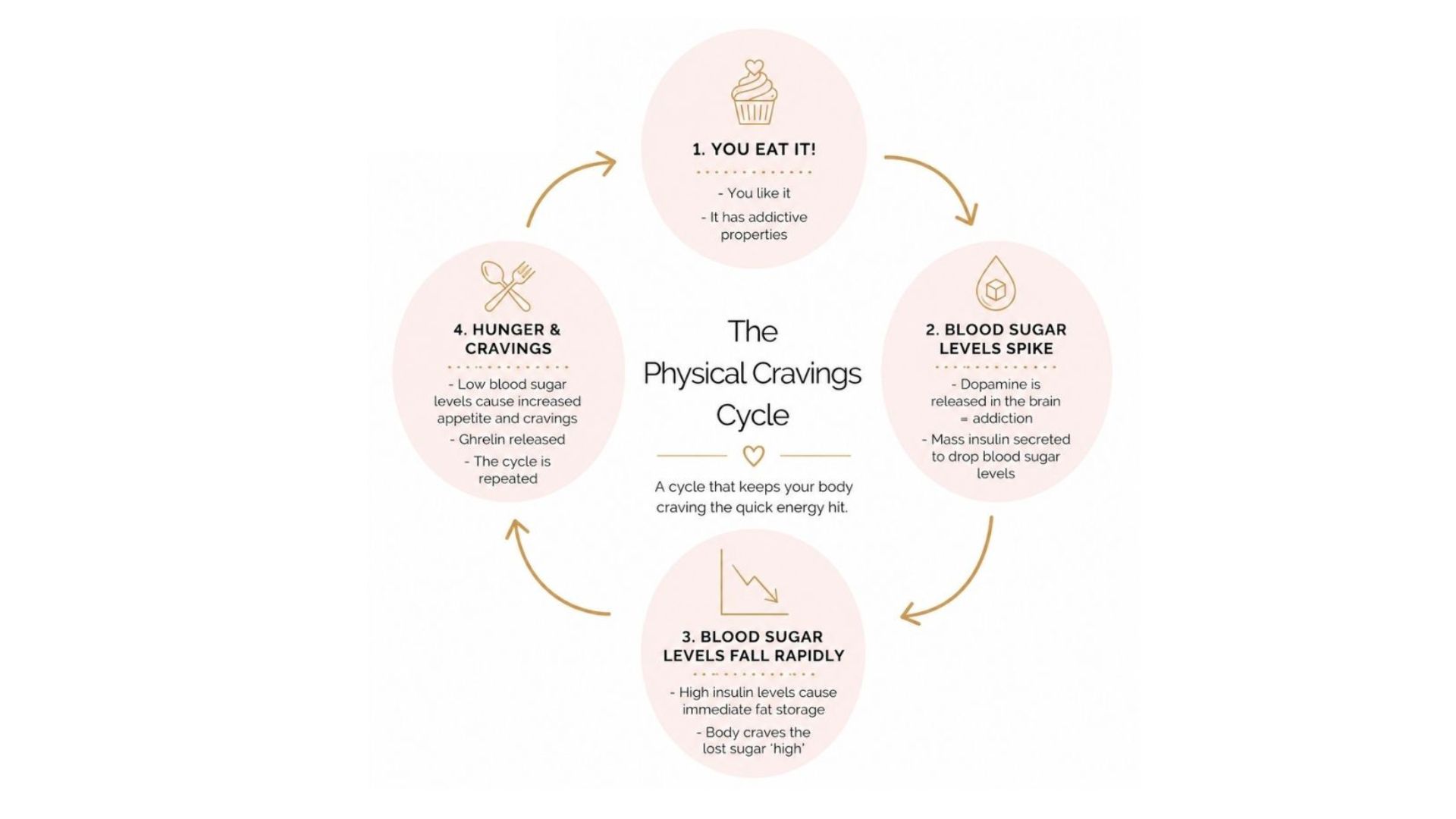
Your blood sugar rises quickly.
Your body releases insulin to help move that sugar out of your bloodstream and into your cells where it can use it for energy.
For some people, that rapid rise can be followed by a noticeable drop in blood sugar, leaving you feeling hungry again surprisingly soon, even though you've recently eaten.
At the same time, sugary foods stimulate the brain's reward system by increasing dopamine, the neurotransmitter involved in motivation, pleasure and learning.
Your brain notices, "That felt good." So the next time you're tired, stressed, bored or looking for comfort, your brain remembers that quick source of reward and encourages you to seek it again.
It's not simply about the sugar.
It's about the combination of blood sugar changes, reward pathways and learned habits working together.
Here's what that looks like:
Why Highly Processed Foods Can Make Food Noise Louder
One thing I often explain in my Food Calm program is that many modern foods are designed to be incredibly rewarding.
Food manufacturers carefully combine sugar, refined carbohydrates, salt and fat to create foods that are extremely enjoyable to eat. They're what researchers often call hyperpalatable foods.
The challenge isn't that these foods can never be enjoyed.
The challenge is that they often don't provide the same level of fullness and satisfaction as meals built around protein, fibre and healthy fats.
You may finish eating them, yet still find yourself thinking about food.
Not because you've failed or have no willpower, but because your body's appetite signalling hasn't been fully supported.
It's About More Than Sugar
This is where I think many conversations around sugar miss the mark.
The answer isn't necessarily to cut sugar out completely.
For most people, that's unrealistic and often creates an "all or nothing" mindset that can actually make cravings worse.
Instead, I encourage people to ask a different question: "How can I better support my body's appetite signalling?"
Because when we do that, cravings often become quieter naturally.
Five Ways to Support Your Appetite Signals
Rather than focusing on what to eliminate, start by looking at what you can add.
1. Prioritise Protein at Breakfast
Protein helps support satiety, slows digestion and can help reduce mid-morning cravings.
Instead of toast on its own, try:
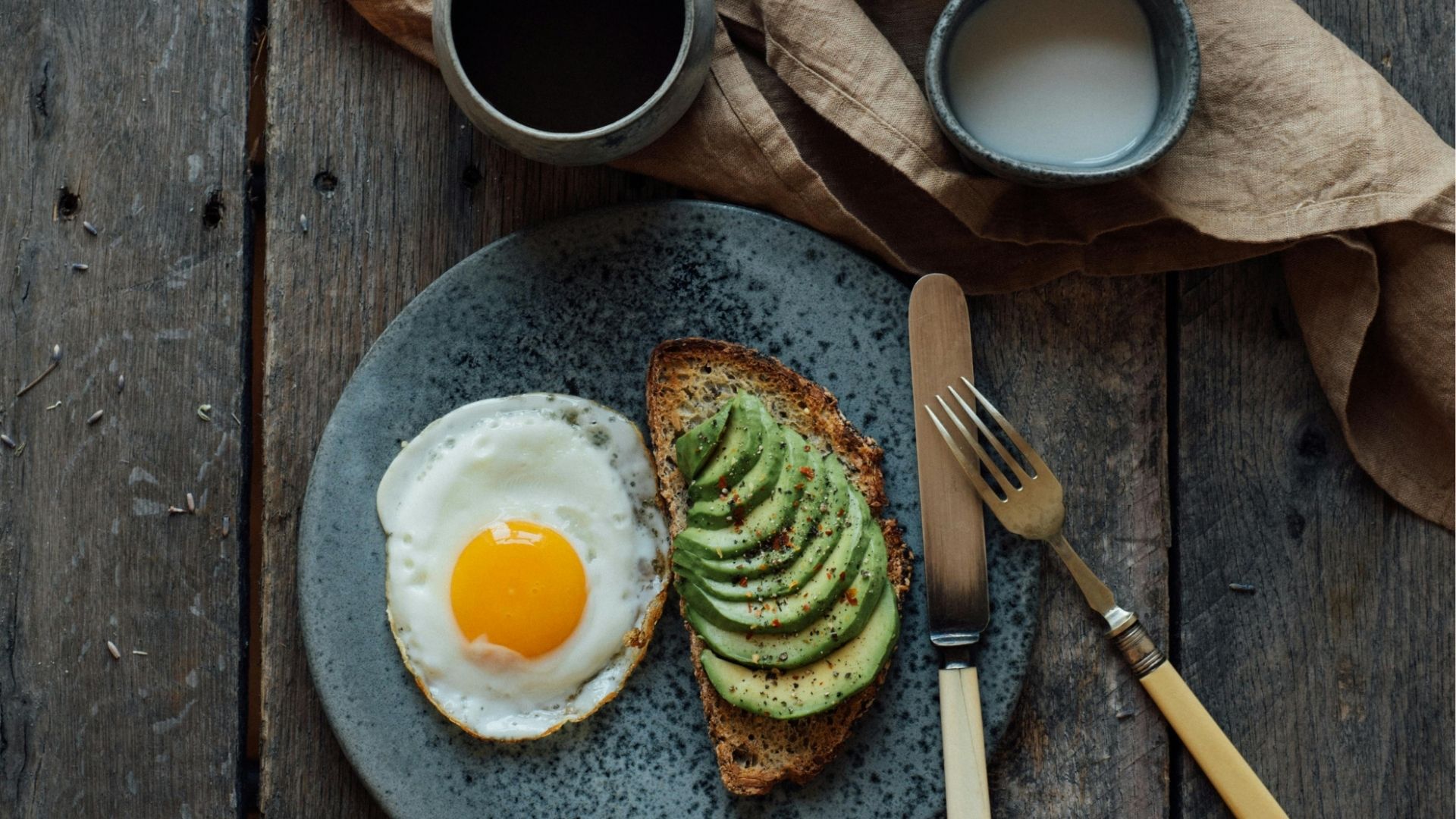
- Eggs on wholegrain toast with some sort of fibre e.g. tomato, mushrooms, spinach. Or if you don't have time for that, spread some avocado on your toast to provide a good source of healthy fat.
- Greek yoghurt with berries and nuts or seeds or a sprinkle of homemade granola
- A protein smoothie with protein powder, berries or banana, and a spoon of nut butter
- Cottage cheese and avocado on grainy toast
2. Pair Carbohydrates with Protein and Fibre
Rather than eating carbohydrates on their own, combine them with foods that help slow digestion,
For example instead of:
- A banana, try a banana with nut butter or a small handful of nuts
- Instead of crackers, try crackers with hummus
- Instead of bread or toast, try toast with eggs or avocado or banana and nut butter
These small combinations can make a noticeable difference to both fullness and energy.
A Different Way to Think About Sugar
One of my favourite reminders is this, sugar isn't the enemy.
But neither is it neutral.
The goal isn't to fear it or avoid it forever.
The goal is to understand how different foods affect your energy, hunger and food noise so you can make choices that leave you feeling your best.
For many women, that means becoming more intentional, not more restrictive.
Final Thoughts
If you've ever wondered why it's so difficult to stop after one sweet treat, you're not imagining it!
There are genuine biological reasons why some foods leave you wanting more.
The good news?
When you begin supporting your body's natural appetite signalling through balanced meals, adequate protein, fibre, sleep and stress management, something interesting often happens.
Food starts taking up less space in your mind.
Cravings become less intense.
And eating begins to feel easier again.
Not because you've become more disciplined.
But because you're finally working with your body instead of against it.
Ready to Quiet the Food Noise?
If you'd like to learn more about what's driving your cravings and appetite, explore the free tasters and resources on my website.
Explore my free tasters.
And if you're ready to build a calmer, more sustainable relationship with food, my Food Noise to Food Calm program takes a deep dive into the science of food noise and, more importantly, the practical strategies that help reduce it in everyday life.
Learn more about the Food Noise to Food Calm.